Posts Tagged ‘technology’

SocSES Webinar with Denise Simmons on Innovation and Resilient Agriculture.

Here is a recording of our latest webinar for the SocSES webinar series.

______________________________________________________________________________________________

Title

Reimagining Science-based and institutional-led innovation for a (Climate) Resilient Agricultural System in Guyana

Abstract:

This research analyzes how Guyana’s agricultural institutions are innovating to keep the climate-vulnerable rice sector resilient. Using the hypothesis of induced innovation, document analysis, and focus groups, it shows how science-based advances and polycentric collaboration—spanning new rice varieties, agronomy, ICT tools, and water management—co-produce adaptation. The work clarifies how institutional arrangements shape the generation, coordination, and scaling of climate-resilient innovation.

Bio: 

Denise Simmons is a Senior Lecturer in the Department of Environmental Studies of the Faculty of Earth and Environmental Sciences at the University of Guyana where she teaches courses in Environmental Chemistry, Aquatic Sciences and Environmental Impact Assessment. Her research interests and scholarly work are primarily in environmental pollution, environmental impact assessment, education for sustainable development, and more recently at the intersection of institutions, innovation and climate adaptation. She holds a BSc in Chemistry/Physics and a MSc in Environmental Science. She defended her dissertation in 2026 and graduated with a PhD in Innovation in Global Development from the Rob Walton College of Global Futures, Arizona State University.

__________________________________________________________________________________

This is the latest in a series of webinars. Past recordings can be found here.
SocSES Webinar with Amanda Jiménez Aceituno on Transformative Pathways towards Sustainable and Just Futures

Here is a recording of our latest webinar for the SocSES webinar series.

______________________________________________________________________________________________

Title

Transformative pathways towards sustainable and just futures: Insights from the Seeds of Good Anthropocene and the 3 Horizons Approach

Abstract:

Contemporary ecological, social, and economic crises highlight how deeply global societies remain locked into unsustainable pathways. Shifting these pathways requires fundamental transformative changes, guided by new ways of relating to nature and addressing inequalities based on compelling and actionable visions of just and sustainable futures. Sustainability scholars have emphasized the need to identify opportunities for transformative change and to understand the agency of different actors and their collaborations in pursuing such transformations. In this seminar, I approach transformation theory from a social-innovation lens, drawing on insights from the Seeds of Good Anthropocenes project to explore how alternative, non-mainstream initiatives can build (or erode) resilience and open space for systemic change. I illustrate these dynamics with examples from the Resilience Must-Knows report, showing how coping, adaptation, and transformation unfold in practice. I then share findings from a case study in southeast Spain, where the Three Horizons methodology was used as a participatory scenario-building process to create desirable future visions, identify current system traps, and develop actionable strategies for regional change. Finally, I discuss emerging research on the role of Indigenous Peoples and Local Communities-led initiatives as catalysts for social-ecological transformations. Together, these insights show how local “seeds” and participatory foresight can help guide pathways toward more sustainable and just futures. 

Bio: 

Amanda Jiménez Aceituno is a sustainability researcher and theme leader at the Stockholm Resilience Centre with a background in Environmental Sciences and a PhD in Environmental Education. Jiménez´s work focuses on sustainability transformations, contributing to its conceptual and methodological development, such as the use of the values-rules-knowledge framework or the leverage points approach to reveal the transformative potential of Indigenous Peoples and Local Communities (IPLC)- led initiatives (e.g., Jiménez-Aceituno et al. 2025). The Seeds of the Good Anthropocenes approach has been a key platform in her study of transformations. Jiménez also works on developing and implementing transdisciplinary research methods that can enhance our understanding of collective processes and foster sustainability in social-ecological systems.

__________________________________________________________________________________

This is the latest in a series of webinars. Past recordings can be found here.

SocSES Webinar with Tara Grillos on Collective Decision Making and Experimental Evidence from Kenya

Here is a recording of our latest webinar for the PECS webinar series.

______________________________________________________________________________________________

Title

Collective Decision Making & Local Public Goods – Experimental Evidence from Kenyas

Abstract:

One of Elinor Ostrom’s design principles for effective commons governance emphasizes the role of direct participation in decision making. Inclusion in collective decisions has been linked experimentally to greater self-stated willingness to invest in local public goods, increased public good contributions, and greater feelings of ownership over development projects, as compared with exclusion from or delegation of decisions. Yet there are a wide variety of methods that can be used to engage individuals directly in group decision making, and there is limited guidance on the design of collective choice institutions for achieving more socially optimal long-run outcomes. In this presentation, I will discuss evidence from two closely related experiments, one in the lab and one in the field (with co-author Michael Touchton), in which we randomly vary different participatory decision processes, ranging from purely aggregative to more deliberative approaches to group decision making. Both take place in the context of local public good provision in Kenya, where the constitution requires some form of citizen participation in government spending decisions and where the creation of local public goods is still quite salient due to a lack of basic infrastructure such as potable water systems. I will present data on the achievement of more socially optimal outcomes from the laboratory setting and on behavioral measures of long-run collective action from the field setting. We find that more deliberative procedures may lead to better decisions, but that these benefits do not necessarily translate into higher satisfaction among participants nor into greater long-run collective action. Our findings highlight tradeoffs in institutional design and suggest that practitioners and policy-makers should employ more demanding procedures only when they stand to be particularly impactful.  

Bio: 

Tara Grillos is an associate professor in the Department of Political Science at Purdue University and co-director of the JMK Experimental Social Science Research Lab. She received her PhD in Public Policy from Harvard University and was a postdoctoral researcher at the University of Colorado’s Institute of Behavioral Science. Grillos teaches courses on environmental policy, causal inference, and experimental methods. Her research focuses on the human dimensions of sustainable development policy. She is interested in questions of participation, deliberation, collective action, and public goods provision, particularly with respect to natural resource dilemmas in developing countries. 

__________________________________________________________________________________

This is the latest in a series of webinars. Past recordings can be found here.

SocSES Webinar with Adriana Molina Garzón on Collaboration and Conflict

Here is a recording of our latest webinar for the PECS webinar series.

______________________________________________________________________________________________

Title

Can interventions reduce extreme poverty in rural areas while conserving the environment? Evidence from RCTs

Abstract:

Balancing extreme poverty reduction with environmental conservation in rural LMICs requires credible causal evidence about which program designs deliver joint gains and when trade-offs arise. We conducted a systematic review of randomized controlled trials (RCTs) in rural, forested contexts, adopting a multi-outcome approach that includes poverty (income, assets, consumption, living conditions, labor, agricultural production) and conservation (forest cover/land-use change; biodiversity when available). Our search across multiple sources resulted in 112 RCT studies, with only 5 measuring both poverty and conservation results. Preliminary synthesis indicates: (i) on poverty, main gains concentrate in assets and income and were most common under monetary and mixed designs; non-monetary programs showed fewer short-run welfare effects. (ii) On conservation, significant positive effects were more frequently reported by non-monetary designs, especially training/extension and monitoring, primarily on forest presence; monetary and mixed designs yielded few significant conservation effects. (iii) Among the five dual-outcome RCTs, avoided-deforestation PES consistently delivered environmental wins with neutral short-run poverty effects; auction-based targeting improved environmental performance; intensive technical assistance paired with training achieved joint gains; unconditional liquidity raised deforestation risk; and production re-specialization (e.g., eco-tourism) showed localized environmental benefits with slower income responses. Cross-cutting design features such as conditionality, monitoring, targeting, and implementation intensity (e.g., ongoing TA), appeared to mediate impacts, and short evaluation horizons often limited detection of slower-moving welfare effects. This review develops a typology of intervention modalities and a preliminary mapping from design features to likely outcome patterns, while highlighting critical evidence gaps: few RCTs measuring both domains, limited biodiversity outcomes, and heterogeneous, context-dependent effects.   

Bio: 

Adriana Molina-Garzón is an Assistant Professor at the Paul H. O’Neill School of Public and Environmental Affairs in Indianapolis. Her primary research focuses on the factors that hinder or promote sustainable development in rural areas, with particular attention to governance arrangements that enable such development. She is especially interested in community-based approaches, the role of NGOs, and collaborations among these actors.  

__________________________________________________________________________________

This is the latest in a series of webinars. Past recordings can be found here.

SocSES/PECS Webinar with Maria Mancilla Garcia on Collaboration and Conflict

Here is a recording of our latest webinar for the PECS webinar series.

______________________________________________________________________________________________

Title

Investigating horizontal conflicts: Tackling socio-environmental conflicts where roles are complex and changing

Abstract:

Environmental conflicts have been studied from a multiplicity of perspectives within the different sub disciplines of environmental studies. Within Political Ecology, for example, there is a long tradition of studying the root causes of environmental conflicts as well as their transformative potential as a process that might give voice to marginalized actors, or allow them to craft alliances beyond the apparent borders of the conflict. Within managerial approaches to environmental governance, conflict has often been seen as a problem to solve or to avoid, and influenced by deliberative perspectives, participation has been presented as a way forward to address potential conflicts. In this presentation, I would like to develop a theoretical perspective on conflict that considers it as entangled with collaboration, where roles and relationships are complex and intertwined. I use the idea of “horizontal conflicts” as a way to convey the multiplicity of responsibilities and positions that such type of conflict entails, where power endowments are ambiguous and changing. I bring to the discussion reflections from several cases, namely our work with coastal communities in Kenya and Mozambique where we used Forum Theatre as a research method to investigate horizontal conflicts, my collaboration with colleagues using a diversity of methods to understand the eutrophication crises of the Mar Menor Lagoon in Spain and the associated management decisions, and preliminary analysis of interview and observation data from a new project focusing on the conflict between fisheries management and seal and cormorant conservation in the Swedish Baltic Sea.   

Bio: 

Maria Mancilla Garcia is a researcher and theme leader at the Stockholm Resilience Centre. Her research covers theoretical work on process-relational perspectives, i.e. perspectives that put the emphasis on the role of ever-evolving relations in crafting and changing social-ecological systems, with a focus on conflict and collaboration dynamics understood as entangled. Maria’s research investigates a diversity of empirical governance cases related to water and sea governance with special attention to the role of street-level public officers. She uses a multiplicity of methods which range from network analysis and traditional qualitative research methods such as semi-structured interviewing, to more innovative ones such as co-production dialogues and arts-based approaches. She reflects on her engagement with theoretical, empirical and methodological advancements through her work as theme leader for the theme Doing Sustainability Research: The How. Maria is an environmental social scientist with background in political science, development studies and philosophy, but has always worked in collaboration with natural scientists, especially marine biologists, ecologists and ecological modellers.  

__________________________________________________________________________________

This is the latest in a series of webinars. Past recordings can be found here.

SocSES/PECS Webinar with Julianna Merçon and Loni Hensler on Beyond methods

Here is a recording of our latest webinar for the PECS webinar series.

______________________________________________________________________________________________

Title

Beyond methods: An experience of collective stewardship of territories in Mexico

Abstract:

Participatory methods are praised as drivers for urgent transformations to address multiple crises and, at the same time, they are criticized as the new tyranny to legitimize decisions and research outcomes. This presentation is an invitation to revisit the notion of methods and the way in which they have been implemented in order to open new paths for transformation. From the collective journey of the Forest Stewards Network that celebrates 10 years of existence in Xalapa, Veracruz, we share insights into the complex life of collaborative multi-stakeholder processes. We present three key participatory experiences and their corresponding lessons: i. the citizens’ meeting from which the network’s territorial shared management process emerged, ii. the collaborative construction of utopias for strategic planning, and iii. the learning tours through the territories, with exchanges from a peasant to peasant approach. We question the central place often attributed to methods and discuss other fundamental dimensions of collective processes oriented towards justice and sustainability. What lies beyond methods? How do we facilitate socio-ecological transformation processes? 

Bio: 

Juliana Merçon is a researcher at the Institute for Research in Education at Universidad Veracruzana, Mexico. She conducts participatory action research in collaboration with urban and rural networks, organizations and communities. Juliana works with agroecological, feminist and decolonial approaches and has participated in the Forest Stewards Network since its conception. 

Loni Hensler practices the art of facilitating and systematizing participatory processes of collective action towards a comanagement of more just and sustainable territories with rural, urban, indigenous and fisher communities. She works on transformative learning, diverse values around nature, the defense of territory and the construction of horizontalities from a collaborative action-research approach. She is a postdoctoral researcher at the Colegio de la Frontera Sur (ECOSUR) and a member of multiple networks. 

__________________________________________________________________________________

This is the latest in a series of webinars. Past recordings can be found here.

What do Prius drivers and drunk drivers have in common?

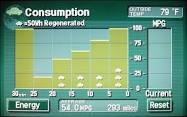
OK.  Let me start by saying I fully support fuel-efficient driving and I do not condone driving under the influence.  Let me also confess that I drive a Prius.  After buying the car, I noticed that all of its indicators on energy efficiency were causing me to alter my driving habits.  See the photos below:

consumption prius toyota-prius-display

These displays are great, and they succeed in their objective of making additional data readily at hand for the driver.  They also encourage drivers to act in ways that are more fuel efficient, and this is a great thing.  Yet like all positive change, this one comes with a few drawbacks.  The first is that all of the display work tends to draw the driver’s eyes from the road to the display.  This was the initial change that led me to think about how Prius drivers’ driving habits may be quite different than those of many other vehicles.  Of course, I can think of plenty of other activities that alter driving habits (texting, selecting music on usb connections, etc), so let’s not dwell on this too much.  It was an anecdotal observation and nothing more.  And we can think of technological solutions to this problem, like projecting onto the windshield, as many luxury cars do already.

However as I drove more, I started to see other issues – both good and bad – with driving based on this new information.  I began to display tendencies toward hypermiling behavior.  Hypermiling is adjusting your driving habits to achieve greater fuel economy.  We all do this to an extent, yet I am struck by the driving habits of hard-core hypermilers and how much some of these habits/tendencies resemble those of driving under the influence.  To see a great list of ways to increase your fuel efficiency through hypermiling, see http://ecomodder.com/forum/EM-hypermiling-driving-tips-ecodriving.php.

As you can see from this list, there are a number of habits that could lead to “irrational” driving or displays of driving resembling that of driving under the influence. From that list, I’ll make just a few comparisons.  First, the hypermilers talk about “target driving” or driving at a constant (low) level of fuel consumption.  This leads to slowing down and speeding up as you go up and down hills.  Such variable speed driving is a common symptom of a driver not “paying attention”.  Second, hypermilers often try to drive the minimum speed limit, rather than the maximum (or more), something problematic on many of our highways.  Third, the hypermilers suggest coasting to slow down and minimizing the use of brakes.  They also suggest when braking is needed, you should brake hard and later than normal.  All of these habits can lead to improving fuel economy.  However, they (and many other techniques) also resemble the sporadic driving behaviors of impaired drivers.

A few caveats… First, I see a great need to learn how to drive more fuel efficiently, and many of these techniques work and can make tremendous differences in fuel consumption.  Second, the website I refer to above also emphasizes safety and following traffic regulations, noting the trade-offs of safety inherent in some of their suggestions.  Third, there is a middle road between unsafe driving and being more conscientious of our driving decisions.  I’ve learned a lot about my own driving through experimenting with these techniques.  They are quite different from the racing and muscle car mentality that I grew up with.  In a future post, I’d like to look into automotive engineering breakthroughs.  I think that the true engineering breakthroughs are now coming on the efficiency front rather than on the speed/acceleration front.  But I’ll leave that alone for the moment.

Any thoughts from police and whether they see this phenomena as well?