Thoughts on Sustainable Development Goals

In 2000, the UN established the Millennium Development Goals to set aspirational targets for international development across a range of issue areas including poverty alleviation, education, gender equality, child and maternal health, environmental sustainability, reducing HIV/AIDS and communicable diseases, and building a global partnership for development.  With a target date of 2015, many of these goals remain both unattained and unattainable.  As a result, at last year’s Rio+20 sustainable development summit UN member states agreed to start a process of designing a new set of “sustainable development” goals to replace the MDGs. The working group proposing the new list of goals is tasked to select goals over the next year that are “action-oriented, concise and easy to communicate, limited in number, aspirational, global in nature and universally applicable to all countries while taking into account different national realities, capacities and levels of development and respecting national policies and priorities”.

Since Rio+20 a huge number of potential goals have been generated by development experts, agencies, NGOs, government bureaucracies, and researchers.  One prominent example that integrates the SDGs into research on the planetary boundaries literature is Griggs et al’s piece last month in Nature (Griggs, D., Stafford-Smith, M., Gaffney, O., Rockström, J., Öhman, M. C., Shyamsundar, P., … & Noble, I. (2013). Policy: Sustainable development goals for people and planet. Nature495(7441), 305-307.).  In this piece, the authors propose viewing the goals for a system whereby the economy services society that is itself nested within the Earth’s life-support system.  From here, they elicit a number of potential SDGs.

In response to this piece (see our comments in the 20 June 2013 edition of Nature) and to the broader set of literature, the Beijer Young Scholars highlight the necessity to incorporate a scientific understanding of social change into goal formulation at scales ranging from the individual to that of the international community.  Without a view of what change is feasible, how goals interact with each other, and means of overcoming negative institutional inertia, the international community will once again be left with a list of noble, yet unachieved, goals similar to the MDGs.  It is our hope that we can use our knowledge to improve upon past outcomes.

Optimism in Sustainability and Environmental Studies

In all of my courses, I strive to focus on positive signs for sustainability and improvements in both the human condition and in the state of the planet.  The field is packed with naysayers and doomsday predictions, many of whom, I think, may prove to be correct for their concern.  In spite of this, I am optimistic.  The apocalyptic forecasts often (but clearly not always) lead to adaptation and changing behaviors.  This is the reflexivity that social scientists often discuss (and struggle with in our research) – the dynamic and introspective nature of many of the systems that we study.  In my policy classes, we often discuss the oft-cited example of the Montreal Protocol on Ozone-depleting Substances and how the international community effectively mitigated a serious problem (the Ozone Hole) and made it a non-issue.  In my Workshop course, student groups have looked at a number of local sustainability challenges and have taken concrete steps to resolve the problems on a local-scale (the “Think globally, act locally” idea put into practice).  With this in mind, I was quite curious to read a couple of books written with a similar optimistic mindset – “The Rational Optimist” by Matt Ridley and “Abundance” by Peter Diamandis and Steven Kotler.  For now, I want to focus on some of Ridley’s writing.

As I hope the preceding paragraph makes clear, I’m fully supportive, indeed, overly eager, for writing that looks at positive signs for humanity and sustainability.  Ridley does a great job at highlighting many of the ways that the human condition has improved over the years.  For this reason alone, it’s a worthwhile read.  A marked contrast to the eloquent yet pessimistic writing of many resilience/sustainability/environmental writers.  But there are a number of caveats to my recommendation.  First, as I stated above, the “pessimists” are 1) not wrong as often as Ridley makes it seem and 2) their clarion calls often lead to changes (and hence, often making their own predictions wrong).  Second, Ridley, as expected from a former editor of “The Economist” advocates a neoliberal agenda.  For those not familiar with the academic jargon, this means he is a strong advocate of international trade, the market as the main solution to many dilemmas, small government, and commodification of many goods not currently in the market.  If this is or isn’t your cup of tea, you have been forewarned.  If it is, enjoy.

Now, instead of writing a rather formal review, I’d like to avoid a debate on many of the strengths (some of which I mentioned in the opening paragraph) and weaknesses (particularly a noted lack of understanding of tipping points, nonlinear systems, and thresholds, fat tailed distributions, and most surprisingly a lack of nuanced understanding of discount rates over long-time horizons).  I would like to draw attention to 3 areas that the book avoids, which may lead to Ridley’s overly smug findings:

  • The role of innovation and technological fixes
  • The challenge of inequality
  • The difference between governance and government as well as government failures as opposed to market failures

First, everything Ridley discusses presupposes innovation as a cure-all for many of today’s dilemmas.  While the pessimists often overlook society’s capacity to innovate for either adaptation or mitigation, the rational optimist presupposes  technological fixes to everything.  However, this overlooks the effects of timing between innovation and when its needed, and it ignores the repeated instances of innovation plateaus.  These plateaus have regularly occurred since the Acheulean tools of homo erectus and sometimes last a long, long time.  This also overlooks the role of innovation and technology as the cause of many of our current problems.  Ridley, for instance, cites the role of fossil fuels in improving our standard of living, but for some reason he doesn’t see innovation as an effective response to eliminating the “bads” of fossil fuels now.

Second, this rational optimism assumes that if everyone improves a little (the pareto frontier gets pushed out), that this is enough.  There is no mention of current levels of inequality or any place for redistribution.  If this doesn’t seem to be an issue, please read Stiglitz’s “The Price of Inequality” for an overview of why this could be important.

Third, for some reason, there is a noted focus on the various types of government failure (clearly an issue).  But there is little discussion of noted market failures and the role of government in addressing them.  Nor is there much understanding of the role of government in supporting market institutions (the rules that enable it), the securing of property rights (in spite of invoking de Soto’s work), or a legal system that helps grease the wheels of his market-based system.  In addition, there is no understanding of how governance (the ordering of interpersonal or intergroup relations) differs from formal government.  Governance occurs within all groups – in/through businesses, NGOs, civil society, within families, formal and informal groups, etc.

More to follow on “Abundance”.  For now, please enjoy.  And do think about the benefits from a positive outlook.
Research Ideas on Boundaries and Natural Resource Management

Compare these two images:

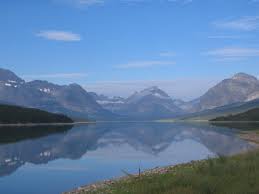
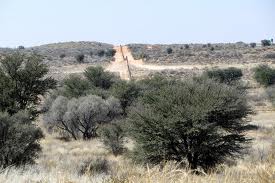
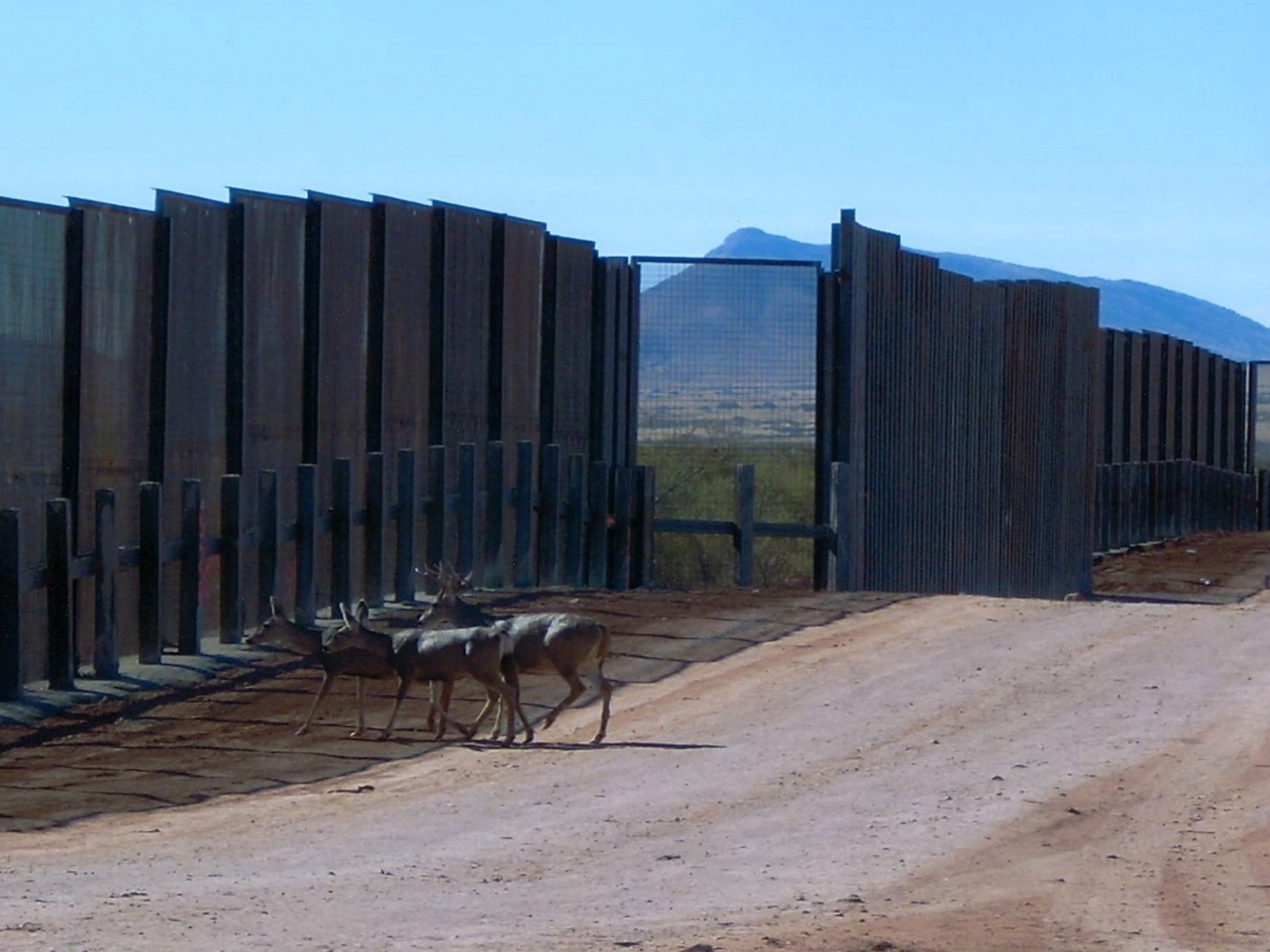
sa_moz_borderfenceAZMEx

On the left is a photo of the South Africa-Mozambique border in the Great Limpopo Transfrontier Park.  On the right is a classic border shot from the Sierra Club of the US-Mexico border wall.  In both cases, these fences are in the middle of regions with a great deal of transboundary conservation and collaborative environmental management.  In both cases, we have tremendous economic disparity driving illegal migration and law enforcement responses (US-Mexico difference in GDP/capita = 3333% and South Africa-Mozambique = 9750%).  In addition, the US and Mexico struggle with drugs and gun smuggling.  South Africa and Mozambique have smugglers, but they also face one of the worst outbreaks in rhino poaching in recent times.  ALL rhinos in the Mozambican section of the transboundary park have been slaughtered in the past year (see http://allafrica.com/stories/201305061555.html.  See also this brilliant response by Biggs et al in Science: http://www.rhinoresourcecenter.com/pdf_files/136/1362103629.pdf).

In such environments, it may be questionable to see how transboundary conservation can work.  In fact, these are hardly the most trying cases.  See these efforts in the Korean DMZ (http://www.dmzforum.org/aboutus/about_dmzforum.php) or these in Israel-Palestine (http://arava.org/userfiles/file/Research/TransboundaryWaterManagement/MERC_final_streams%20report.pdf).  My own work over the past several years has focused on working across borders in conservation and environmental management in Southern Africa and along the US-Mexico border, the locations in the two photos.

My latest project, in conjunction with David Manuel-Navarrete of ASU’s School of Sustainability and Forrest Fleischman of Dartmouth College, compares theories of borders and boundaries from common-pool resource literature with that from geography and sustainability to try to understand and bring together ecological boundaries, social boundaries and social conceptions of the first two.  The hope is to better understand effective governance of natural resources and how we can build relationships and work across many types of boundaries.  In the process, we want to create new bridges and dismantle the barriers standing in the way.

Ultimately, I’d like to follow up some of this theoretical work with new case studies in both the US Southwest and in some of the new transboundary parks of southern Africa.  In particular, working with Bram Buscher, we’d like to look at the attempts to reconcile the cross-border challenges of the massif of a transboundary protected area known as KAZA – the Kanvango-Zambezi Transfrontier Park which spans some 300,000 square kilometers across Angola, Botswana, Namibia, Zambia, and Zimbabwe.

Place-based Knowledge in a World of Globalization

Image

The photo above shows US Forest Service cultural officers on Agua Fria National Monument with decades of experience in the area meeting along with natural scientists and field officers from the BLM, Arizona Game and Fish and dozens of other stakeholders.  Many of the field officers and stakeholders have also worked in the area for many years.  The stakeholder field trip at which this photo was taken brought together a tremendous amount of local expertise and resulted in great collaboration.  As a scientist new to the region, this gathering was enlightening, exciting, and disheartening in that it showed the clear limits to my own local knowledge.

This type of engagement exemplifies literature on the importance of traditional or local knowledge from research on social-ecological systems and clearly draws on anthropological findings from the last several decades.  Kudos to the anthropologist for leading the charge for so long.  Finally, others are getting on the bandwagon.

However, the dilemma that emerges in the globalized world of much of today’s scholarship is that academics rarely have the luxury or time horizons to develop this place-based knowledge.  With notable exceptions, it seems that the majority of academics praise the idea of place-based knowledge while practicing the opposite.  As we fly around the world drawing comparisons between disparate cases (see link to this critical review of Jared Diamond’s latest comparative study “The World until Yesterday” at http://www.columbia.edu/~saw2156/HunterBlatherer.pdf) or creating larger and larger databases (see my own work with the SESMAD project), we improve our generalizability and strengthen external validity.  But I’m afraid that this is often at the expense of a more comprehensive understanding of local peculiarities and strong internal validation.

This reminds me of a story that my grandfather told me.  A lifelong farmer, with a deep knowledge of the fields, weather, and natural surroundings from decades of work, he tells of meeting a university agriculture officer.  The young, well-educated man spent a day with my grandfather deriding practice after practice that my grandfather used.  My grandfather silently continued to take the “expert” around the farm while listening to the harangue.  At the end of the day, the university man said, “This is so out-of-date.  I’ll bet that you don’t even get a bushel of apples off of that tree.”  My grandfather responded, “I reckon that you’re right.  That’s a pear tree.”

Amidst the excitement of new (dare I say, exotic) sites and the pursuit of widely ranging ideas, it’s easy to get drawn in new directions and field sites.  But I hope that, in spite of the incentives pushing us more widely afield, we can bear in mind the great ecological and anthropological research that emerged solely because of the development of local knowledge.  Even more, I hope that we can bear in mind the story from my grandfather.

A Brief Comment on Problem and Project-based Learning in the Classroom

Over the past few years, I’ve had the good fortune to work with some experts on problem- and project-based learning (PPBL) through my courses in the School of Sustainability.  The idea behind this is to allow students to self-guide and direct their learning through engagement beyond the classroom.  Rather than having lecture-based classes, PPBL shifts the role of the instructor from “sage on the stage” to “guide from the side”.

The basic tenets (per Katja Brundiers, who has taught me about PPBL) are to create a learning environment where students work:

  • on “wicked problems” in sustainability,
  • in collaborative teams,
  • conducting self-directed research to investigate an issue,
  • simulating and/or engaging with real-world settings and developing life skills, and
  • reflecting on their learning, the group processes, and project outcomes.

It uses projects to convey two sets of learning – the core material of the course and skills in project management and team-building.  There are a number of ways to accomplish this in the classroom ranging from less self-directed learning in more traditional class settings to highly self-directed and real-world oriented.  I have used two formats in my own work.  The first is a group project which formed the core deliverables in a traditional class setting.  The second is a workshop course structured entirely around a real-world sustainability project – a sustainability consulting engagement, if you will.

In the classroom

The traditional class experience of PPBL divided the class up into small groups of 5 (12 groups in a class of 60).  The groups all selected from a handful of projects across a range of real-world issues in the community.  Examples included working with the Arizona State Land Department on conservation on public land, working on community engagement in the clean-up efforts of a Superfund site, looking at transportation options in a low-income section of Phoenix, and  so on.  The students were required to split the project up into sub-projects and have each team member investigate a portion of the project.  Some groups divided up around stakeholder groups.  Others took on various aspects of the project (the economics, the ecological component, the political/policy issues, etc).  They then prepared individual papers on their aspect of the problems being confronted in their project.  The next deliverable was a team presentation on the overall problem, integrating the individual components.  They also presented potential solutions.  After the presentation, they then began researching, as a group, which solution to recommend.  Throughout this, the students had some engagement with the external stakeholder, who also served as mentors (as well as judges for the presentations).  The projects had varying degrees of interaction between students and stakeholders.

In the workshop

The workshop course was a two semester course.  The first semester had graduate students working with external stakeholders to develop projects.  For this past term, we had projects on composting at the community-level (both institutionally at ASU and in providing a service to local restaurants), on urban farming and developing a student farm, and on building a retreat center for a sustainability consulting group using alternative building designs (rammed earth, straw bale, cord wood).  The grad students spent the fall creating the project frameworks and developing educational components around a number of skills and competencies that they would teach undergraduates in the spring.

This spring the three graduate student led projects interviewed and selected undergraduates for the class.  The students work in teams on 4 on the projects.  Class is structured around skill building once a week followed by a lab session where the teams meet to further their project.  They meet with the external stakeholders, conduct research (surveys, focus groups, semi-structured interviews, standard archival research), and prepare reports, presentations, and other feedback to the grad students and external project partners.  In the process, the grad students use the projects to convey educational material on sustainability and skill development.  The students gain knowledge, project experience, and real-world learning that they can use to convey their expertise as they approach graduation and pursue their careers.

I must admit that I’m still a novice, experimenting with new methods to instruct and to develop my students.  These are first steps to break free of old, dated modes of education.  Thoughts?

The Robustness of Children

The old saw is that a man with one watch knows what time it is, but a man with two is never sure.  The same holds true for books on child development.  I’ve now read more books than I care to admit on childcare.  Each was written by an expert, generally with a tone that indicates any deviation from this plan will probably result in catastrophic events for you child.  But the first key takeaway that I’ve found is that kids thrive in spite of our best efforts.

This brings me back to the research that forms the foundation of this blog and website, resilience and robustness.  All of my work on resilience comes from the work on social-ecological systems instigated by the breakthroughs of Buzz Holling and his compatriots over the last (gasp) 40 years.  But there is a vast literature on “resilience” in childhood development.  Both research communities have very specific definitions and heaps of research that don’t necessarily speak anything close to the same language.  In the social-ecological community, there have been recent discussions on resilience (the ability to bounce back from disturbance) in contrast to robustness (system persistence when confronted by various types of disturbance or uncertainty).

Kids are robust to a huge variety of disturbances.  They prosper regardless of which child development program we follow.  The experts insist that raising healthy kids requires:

  • a regimented eating-activity-sleeping schedule, except for those that insist that this should be on demand with no schedule
  • co-sleeping, except for those that insist co-sleeping is evil
  • programmed activity and school starting by 2 years of age, except those that insist there should be no formal schooling
  • strict rules, except those that insist on levity and learning
  • pacifiers to satiate natural cravings, again, except by those that think this leads to poor nourishment

And the list goes on as long as we’d like, with phrases like nipple confusion, attachment dilemmas, and so on.

This leads me to Takeaway #2: Kids need three things and three things only:  food, love, and space to run.  This recipe works until at least the age of 3, but it probably holds until the age of 88.

Finally, everyone seems to have their favorite childcare book.  That’s great.  If you find one that works for you and (more importantly) your child, please use it.  However, let’s remember that you have a sample size of 1 (or 2 or 3), and let’s not assume that the same holds for anyone else, let alone everyone.  Now, back to the books.

More thoughts on Collaboration in Environmental Management

In my last (sleep-deprived) post, I commented on the disciplinary divide between social and natural scientists in their views of collaboration.  I noted that the social scientists often focus on building social capital, reducing transaction costs, etc while the natural scientists often focus more on scale.  Clearly, I oversimplified and under-thought (thunk?) these ideas.  The clearest examples of oversight come from any of the literature on watershed management, corridor conservation, or firescape management where both aspects of collaboration are routinely discussed.  But these two different (although not necessarily always discrete) types of collaboration still stumped me.

However, last week I had the good fortune of discussing some planned laboratory experiments on collaboration with Diego Galafassi.  In these experiments, Diego, along with Marco Janssen, Jacopo Baggio, and the esteemed Orjan Bodin, are comparing social-ecological systems in which the ecosystems are connected but different groups of actors have access to different patches.  In each treatment, there are two groups of players each drawing from only one of the ecosystems.  Because the ecosystems are linked, the behavior of each actor affects the other parties.  In one treatment, no one can talk to anyone else.  In another the members harvesting from the same ecosystem can communicate with others also harvesting from the same ecosystem but not to the other parties using the adjoining ecosystem or habitat patch.  In a third treatment, the groups from each ecosystem can talk with each other.  Stay tuned for more about these experiments as we start to run them.

While this is an overly brief synopsis of these experiments, discussing these with Diego sparked a few ideas.  First, the divide in collaboration that I was discussing wasn’t a disciplinary one at all.  Rather, it was about two distinct types of collaboration.  In these experiments, the “within group” treatments is really about collaboration with peers on a given site.  It’s about building social capital, etc (the naively-denoted social science view mentioned previously).  The links with other groups on connected (but separately managed) ecosystems is about scale-expanding.  When I consider case studies from my own research, I started thinking about the work at Agua Fria National Monument.  Here, the Nature Conservancy has facilitated collaborations between the BLM, Forest Service, and Arizona Game and Fish regarding grazing allotments and Collaborative Adaptive Management plans across adjacent BLM/USFS land.  This aspect of the collaboration fits with this view of collaboration as being about scale-expansion.  However, the Collaborative Adaptive Management process that the agencies are going through goes far beyond this.  On the National Monument alone over 50 stakeholder groups have participated in workshops and planning meetings or been invited into the process.  Few of these groups is a land owner in the sense that their collaboration expands the scale of the project in any meaningful sense.  However, it does increase the knowledge base, build legitimacy in the management process, add social capital, and so on.  The two aspects of this case mirror the two separate forms/purposes of collaboration.

Again, these thoughts are still being written in a quick fashion by an author with chronic sleep deficit.  But this framing may help us to better understand collaborations in the field and in the lab.  I’m hopeful that we can explore these ideas in the upcoming research.

Collaboration in Environmental Management and Scale

Just a few quick thoughts…

I have been doing a lot of thinking about the recent push by US Federal agencies for increasing stakeholder engagement and collaborative management.  Most of the discussions within the agencies as well as in the academic literature (in collaborative management, collaborative governance, co-management, etc) have been about collaboration and the social benefits – increasing legitimacy and buy-in, building social capital, gaining access to local knowledge, improving monitoring and enforcement of rules, and so on.  It appears that only occasionally is reference made to the literature that comes from corridor ecology and conservation biology about the gains from changing the scale of management.  The bioregionalism movement focuses on shifting scales and the transboundary conservation work acknowledges this as well.  However, it’s mostly missing from the “collaboration” literature.

The environmental challenges of today are occurring at ever-increasing scales as we approach planetary boundaries in the Anthropocene.  The impacts of increasing populations, affluence, and the globalization of trade, communications, and energy markets have led to a host of problems that span beyond borders.  The real benefits of collaboration, particularly when we look at collaborative governance beyond the most local of scales, seem to accrue from scale expansion, not social benefits.  But I guess this remains to be tested empirically.

– Thoughts from a sleep-deprived new dad

Mini Discussion on Sustainability in Africa

Over the holidays, I had a chance to give a talk to the Mastercard-sponsored Scholars group of ASU students from sub-Saharan Africa.  This helped to launch a class on sustainability in Africa.  It got me thinking about what to cover, given a broad range of topics.  If we agree that sustainability isn’t an “environmental” problem, but a more broadly defined societal problem, then we have a host of issues to choose from – disease, natural resource management, human rights, and so on.

Given my personal predilections, I tend to see poor governance as the common thread through all of these.  My own work and experience in Africa is clearly limited, and the undergrads that I spoke with came from Mozambique, Zimbabwe, Zambia, Senegal, Ghana, Ethiopia, Rwanda, and Kenya.  I’ve only been to a few of these countries and have only spent more than a couple weeks in Moz, so I can hardly claim to be an expert.  But as we started talking about sustainability and the need to foster more resilient social-ecological relations, as a group we found that we had a lot to share, to teach, and to discover.  My own work is about collaboration across some kind of boundary (international, public-private, between individuals or tribes, between states or municipalities) for the collective governance of natural resources.  My African work focused on transboundary protected areas.  In the discussion with the Mastercard Scholars, we kept returning to the same questions:

  • Where can we or should we collaborate?
  • When does it make more sense for groups to “go it alone”?
  • How can we overcome the transaction costs of collaboration to reap collective benefits?
  • How can we make collaborations work better?

There are no silver bullets in response to these questions.  My hope is that my ongoing research can help to guide policymakers and practitioners in their quest for a more sustainable future.

Inauguration Day, Resilience, and American Society

I must admit that I’m feeling very patriotic today.  It’s a bit of a hangover from the Inauguration earlier this week.  Nothing that follows has a blatant right vs. left political agenda, so I apologize in advance for any looking for a fight over that.  I’m sure that there will still be plenty to pick apart.  Again, this isn’t a rigorous scientific study, but I hope that it’s a thoughtful editorial.  For my international friends, it will have a bit of flag-waving.  So be it.

I am fortunate enough to be in the midst of a project on how to enhance the resilience of ecosystem services with other Resilience Alliance Young Scholars.  For those that don’t know, ecosystem services are provisions and services supplied to humankind from ecosystems, generally split into provisioning services (food, wood, etc), regulating services (erosion control, flood mitigation, etc), supporting services (crop pollination, nutrient cycles), and cultural services (recreation, religious use, etc).  In a paper recently published in the Annual Review of Environment and Resources, we identified 7 principles seen as enhancing the resilience of ecosystem services (see Biggs et al. 2012. “Toward Principles for Enhancing the Resilience of Ecosystem Services”, Annual Review of Environment and Resources 37:3.1-28. for the details).  For present purposes, I’ll skip over formal definitions of resilience and, to the chagrin of many of my colleagues, let’s just equate this with sustainability for the moment.  These 7 principles are:

  1. Maintain diversity and redundancy,
  2. Manage connectivity,
  3. Manage slow variables and feedbacks,
  4. Foster an understanding of complex adaptive systems,
  5. Encourage learning and experimentation,
  6. Broaden participation, and
  7. Promote polycentric governance systems.

If you are interested in what these mean in more detail and getting past the jargon, please contact me and/or read the full article.

For now, let’s return to Inauguration Day.  Clearly the (These) United States face a large number of challenges.  Several of these were mentioned in the various speeches, responses, and talking head debates from both sides of the fence.  Without prioritizing, these include a slowly growing economy, climate change, a violent world, a lagging educational system, a gridlocked political system, and so on.  However, if we think about the principles above as mechanisms for sustainability and long-enduring social-ecological systems, I feel enthusiastic about the future of this country.  In particular, the United States, by its design, is built around diversity and having a unique blend of peoples, cultures, and ways of thinking.  Clearly this often creates divides and dissension (see immigration reform).  It also creates opportunities and fosters new ideas.  We have a society, a political system and a private (and third) sector focused on learning and experimenting.  This is the America of innovation and entrepreneurship – in both the private sector and public.  Our society engenders as well as depends upon broad participation.  Putnam’s thoughts on social capital aside, I remain steadfastly optimistic about this as well.  Finally, the Federal system of government, the number of collaborative governance arrangements that I encounter in my regular research, and the vitality of the NGO community nationwide, provides evidence of polycentric governance systems of great breadth and depth.

Granted, there are a great many problems to fix, and the work is never-ending.  The US faces great difficulties, particularly in understanding and responding to complexity (witness the responses to climate change), but I believe these United States are, were, and will remain resilient.