Studying irrigation in China using QCA

This week I had the honor of presenting with the Chinese scholar and economist, Chai Ying.  Chai is a visiting scholar to ASU’s Center for the Study of Institutional Diversity from Guangdong University of Finance and Economics.  We presented her research on 20 small-scale irrigation systems under China’s decentralized irrigation management program.  Drawing on theories of the commons and previous irrigation research in China, Chai identified 5 variables linked to improved efficiency of government involvement in irrigation.  Her study first measured efficiency of government spending across four key outputs – the increase in the area under irrigation, the amount of irrigation infrastructure that was improved, increase in food capacity, and reductions in the water used.  She used linear programming to assess the efficiency of providing these outputs for a given amount of government spending.

Next, we used Qualitative Comparative Analysis (QCA) to look at how different causal clusters of institutional arrangements combined to lead to efficient outputs.  Again, the causal variables were chosen based on past theoretical studies.  The causal variables examined were: market-based pricing of water, routine (regular) fiscal investment, administrative coordination by the local-level of government, self-organized management of the irrigation system, and the hiring of a water monitor/guard.

The results combined in 3 configurations:

  • Having routine fiscal investment and administrative coordination – what we term governance by the government
  • Having either market-based pricing, self-organization, and administrative coordination or market-based pricing, self-organization, routine fiscal investment and a water guard  – what we view as a form of mixed governance  with elements of formal government and self-governance combined
  • Having a self-organized system of governance

The analysis is still in the preliminary phases, and based on the Q&A after the talk, we have both a number of interesting insights and a number of areas that need more work.  We hope to finalize the manuscript and submit over the next few months!

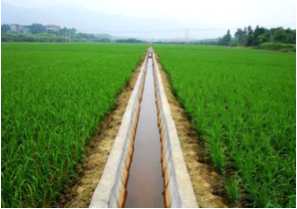
Here is a photo from Chai of one of the irrigation canals:


irrigation

Student projects in Sustainability

As I mentioned in a recent post, I am teaching two courses this semester – one undergraduate course (Policy and Governance in Sustainable Systems) and one graduate course (Applied Projects, as a Capstone or Culminating Experience).  Over the next few weeks, I’d like to share what some of these project teams have undertaken.  The results are quite amazing.

This week, I want to focus on a project led by Sigma Dolins called Maus Haus (www.themaushaus.com).  Maus Haus is a tiny house (136 sq ft), entirely built by students.  They have designed it to feature as many issues of green, sustainable building as possible.  It has been built with recycled SIP (structural insulated panels), will have a composting toilet (not as icky as you might think), solar panels for all energy needs, and on-demand hot water.  It is an amazing example of sustainable living.

The finished project will be used for educational outreach with ASU’s Sustainability GK-12 programs, promoting a number of features that can be incorporated in construction projects.

For more see the fantastic video that the team put together:

The video was made for fundraising purposes.  Whether that holds any interest to you is beside the point, what they have done is pretty cool.  Take a look and see.

Sustainability Consulting Services

Over the past year, I have had the wonderful experience of working with some of the most motivated and hardworking students that I have ever met.  I serve as faculty advisor for Greenlight Solutions, a student sustainability consulting organization that is rapidly growing beyond the bounds of campus.  Their website, http://www.glsolutions.org/, highlights their vision of their organization, their approach to sustainability, and some of their early success stories and client engagements.

To summarize their vision and mission, I see their work flowing along two parallel tracks.  First, they are engaged with a number of real-world clients (WWF- World Wildlife Fund, General Dynamics, Orcutt-Winslow Architecture, Phoenix Metro, among several others).  For their clients, they deliver professional sustainability solutions to challenges that these companies face.  Second, they provide educational training for students and, more importantly, experiential learning opportunities for their members with real stakeholders.  In both, they are succeeding wildly and positioning themselves for success in their future careers.

The organization currently has around 25 members working on 6 projects with plans to grow over the next two years to 100 members engaged on 20 projects.  They are also in the process of developing satellite chapters at other universities.

As my previous posts have alluded, much of my teaching and mentoring involves problem and project-based learning approaches where students must find solution options to real world problems and challenges, not made for the classroom assignments.  Greenlight Solutions takes this approach to the next level by providing the means and mechanisms for students to find their own challenges and sense of purpose.  With that comes valued experience, a burgeoning network of contacts in the fields in which they want to work, the satisfaction of doing a good job, and the enjoyment of working with a well-functioning team.  If everyone’s work did the same, well, wouldn’t that be a nice thought.

New publication on transboundary conservation

Just a quick note to highlight a recent publication of mine in Conservation and Society that is now available online at:

http://www.conservationandsociety.org/text.asp?2013/11/4/420/125758.  The title is “Governance in transboundary conservation: How institutional structure and path dependence matter“.

I’ll write more in the coming week about some of the specific findings.  In the meantime, enjoy!!

A New Application of Problem and Project-Based Learning

At the end of last summer, I wrote about an experimental approach to my 200-level undergraduate class, Systems Thinking, that used problem- and project-based learning (PPBL) techniques in the classroom.  As a lower-division course, I focused on more interactive approaches rather than real-world opportunities and outcomes.  I had student discussion leaders kick off each class by discussing a few key questions from the readings of the day.  I then had a Think-Pair-Share session where students spent a few minutes making notes to themselves in response to a question that I posed them.  They then partnered with a neighbor to discuss this for a few minutes.  Finally, the groups of two or three students then shared their discussion with the rest of the class for an extended group session.  The class ended with rapporteurs summarizing the day’s topics.

In general, this worked very well.  For those interested in trying a similar approach in your own class or training sessions, I would highly recommend it.  I’d also be happy to discuss in more detail.  The key is in crafting appropriate questions for the audience.  I do plan on changing a few aspects of this in the future.  First, the discussion leads often wandered away from the questions and into overviews or summaries of the readings.  This often took too long, led to misunderstandings or went in directions different from those that I had intended.  Second, the Think-Pair-Share sessions only work with some material and should be used with discretion.  Third, the reports from the rapporteurs took up time without adding a great deal.  However, the rapporteurs’ notes were invaluable.  I was able to post these to the course website.  Because they were being graded, they were generally quite thorough.  Also, there were always at least 2 student rapporteurs, so they tended to reinforce each other.  The main benefit was that they allowed the rest of the class to focus on the discussion without worrying about taking detailed notes.  It improved the performance (learning outcomes) of the entire class.

This semester I am teaching a 300-level environmental policy class.  I intend to use a similar format, except that I plan to augment it with a bit more lecture given that most class sessions have some more technical aspects that I want to cover myself.  I also intend to link this with the PPBL work that I’ve used in past versions of this course.  I link student project teams with local NGOs, municipal governments, or State agencies to help provide solutions to real-world challenges.  The students use what they learn in the course to help address problems that others face – the exact type of work that many of the students hope to engage with in their future careers.  They listen to the stakeholders present the issues.  Then working in teams, they present their findings in written reports and in presentations to the stakeholders themselves.  As a result, the students receive direct feedback on their work beyond the grades in a class.  They see the tangible contributions that they can make to society through what they’ve learned in class.

The semester starts next Monday.  We’ll see how it goes.

Forthcoming article in Environmental Modelling

As we put a bow on 2013, I wrapped up my fall semester with the acceptance of an article to the journal Environmental Modelling and Software.  With colleagues Jacopo Baggio, Kenny Salau, and Marco Janssen, we ran some agent-based modeling simulations for an article entitled “Modeling Decision-making across Habitat Patches:  Insights on Large-Scale Conservation Management”.  The gist of the article was to understand how environmental managers could intervene in a mosaic of connected landscapes for conservation.  We looked at predator-prey dynamics with carrying capacity.  Our goal was to compare management success at helping to sustain both species based on taking a local or global perspective and based on monitoring vegetation levels, prey populations, or predator populations.

Based on the model’s simulation results, we find that a global perspective (looking across the network) results in better outcomes than looking at an individual habitat patch (which is what many land managers end up doing in the real-world).  This, of course, is not surprising.  We also found that if managers were constrained to only monitor one population, they did best by looking at prey population levels.  This seems to be because its intermediary position provided insight into levels higher and lower on the food chain.  However, this goes against some theoretical perspectives that articulate monitoring at the lowest level (vegetation).

Our next step is to try to find real-world data to ground our models in empirical results.  We also hope to overlay a network of managers to see how their interactions affect outcomes and whether they are contingent on source-sink dynamics or other network possibilities.  Stay tuned.


The Problem with Public Policy Schools?

I want to thank John Hulsey for posting this editorial from the Washington Post (http://www.washingtonpost.com/opinions/the-problem-with-public-policy-schools/2013/12/06/40d13c10-57ba-11e3-835d-e7173847c7cc_story.html).  I would have otherwise missed it.

I had a number of quick thoughts and wish that I had the benefit of discussing with Roger Parks and other colleagues and advisors from Indiana University’s School of Public and Environmental Affairs before jotting down my ideas.

It’s worthwhile to first note that the authors are thinktank leaders and longstanding critics of the academy.  However, they raise a number of points worth considering.  Others have started targeting a number of critical flaws in the article (not fully understanding the enterprise of science, pushing a specific political agenda, etc).  I don’t want to continue dissecting the weaknesses of the article, but I would like to focus on a few of the key points that they have (perhaps unwittingly) raised.  Many of these challenges facing policy schools are the very same challenges that have been leveled at business schools for decades as well, and b-schools, in spite of their high profile, still struggle with their role in the academy around these issues.

First, the field of study is so broad, how does a school focus to the level needed to provide its students the depth of understanding required for future success?  At the same time, how does a school provide the broad perspective required for systems-level thinking and understanding.  Where should a program direct its efforts?  Should it directly them topically (environmental policy, public finance, etc) or around core skills needed by all MPA/MPP graduates?  How do the schools develop a common core curriculum?

Second, how does the faculty balance basic and applied research?  Should the work be predominantly applied and focused on real-world solutions and deliverables?  Should it be focused more on traditional science?  (And yes, I understand that science and application may not be in opposition).  If the focus is on more traditional academia outputs, how do professors balance their research with the solutions-oriented training and needs of their (mostly) professional students?

Third, and related to the previous questions, how do policy schools balance different disciplinary perspectives?  Is the program truly interdisciplinary?  Is it dominated by particular perspectives (hard-core quant, case-driven, environmental science labs,…) or disciplines (economics, political science, policy analysts)?

I noted earlier that public policy schools and business schools share in many of these dilemmas.  The same can be said for environmental studies programs and schools of sustainability.  At ASU’s School of Sustainability, we struggle with these issues a great deal.  We orient our program toward use-inspired  research and providing real-world solutions.  However, it remains a perpetual challenge to balance the world of academia with this approach.  We focus on an interdisciplinary approach oriented around skill development and sustainability competencies defined by the faculty as a whole (see Wiek, Arnim, Lauren Withycombe, and Charles L. Redman. “Key competencies in sustainability: a reference framework for academic program development.” Sustainability Science 6.2 (2011): 203-218.).  Much of this revolves around a more holistic approach to science and draws on research in complex adaptive systems.  If that sounds further and further from direct application, I need to explain what this means.  But that’s a topic for another day.
What do we mean by Common-Pool Resource Theory?

I have frequently seen people use the term common-pool resource (CPR) theory, and I’ve often been  confused by what they mean beyond that they are concerned with the tragedy of the commons and related ideas.  However, some add in a great deal of collective action theory, concepts from resilience, and ideas about social-ecological systems.  In this text, I won’t try to defend a particular set of hypotheses, theories, or other constructs about what should be counted and what shouldn’t.  Instead, I’d like to talk about a nice public good regarding our understanding of CPRs that springs from the Social-Ecological Systems Meta-Analysis Database (SESMAD) project that I’ve written about before.

At the end of October, ASU hosted the most recent SESMAD meeting.  We met to put the culminating touches on a coding manual for the project database, an attempt to make sure that all project contributors would take a similar approach to diagnosing and coding a case for the database (and appeasing our concerns with inter-coder reliability).

SESMAD


Our first thought was that this would be a painful (soul-sucking, perhaps) but necessary activity that would help further the project and improve the internal validity of the project.  We began with all project members taking on a sub-set of the 200+ variables in the database and defining them, discuss their importance in the CPR literature, and providing relevant citations and sources.  The database, itself, could then be used to provide examples of how we coded these variables across a number of cases.  We then used our time together in Arizona to edit these variable write-ups and create our coding manual.  It turned out to be much more enjoyable than we initially thought.

This brings me to the creation of a public good.  I have personally always struggled with the idea of a single coherent and unifying theory of CPRs. However, this manual represents a nearly exhaustive listing of the variables seen to influence the sustainable governance of CPRs according to the current literature.  As our database goes online in January, scholars will have access to a thorough list of key CPR variables with definitions, an understanding of their importance, with relevant examples and citations.  This can serve as a one-stop source for students and scholars in the study of the commons.  It lacks the structure of a theory, but it enables the construction of a multitude of well-defined hypotheses and theories and provides clarity and consistency for its users.  I hope that its use goes far beyond our project.

New Transboundary Conservation Guidelines

A few weeks ago a group of transboundary conservation specialists met in Thayatal National Park in Northern Austria.  Thayatal National Park, on the Thaya River along the old Iron Curtain, is part of a transboundary protected area with its neighbor, Podyji National Park, in the Czech Republic. We gathered to craft a new IUCN (World Conservation Union) Best Practice Guideline on transboundary conservation in the 21st Century.  Our mission included revising prior recommendations last revised in 2001 as well as begin to take a more holistic view of transboundary conservation and extend this beyond past notions of conservation = national park-style protected areas.

The project brings together a nice blend of scholars, NGO representatives,  conservation practitioners and park officials from around the globe.  We had 20 participants from 17 different countries discussing a range of issues from management and governance to diverse types/styles of transboundary conservation (formal protected areas, mixed land use types, informal collaborations at international and sub-national scales, etc).  Participants gave talks on case studies covering transboundary conservation projects from around the globe.  We also managed to hammer out a first draft of key terms in the field.  In the coming months we will draft a book on that builds on state of the art knowledge on the subject for a launch at the World Parks Congress next year in Sydney.  I will follow up with a post on developments as the guidelines get closer to approval.

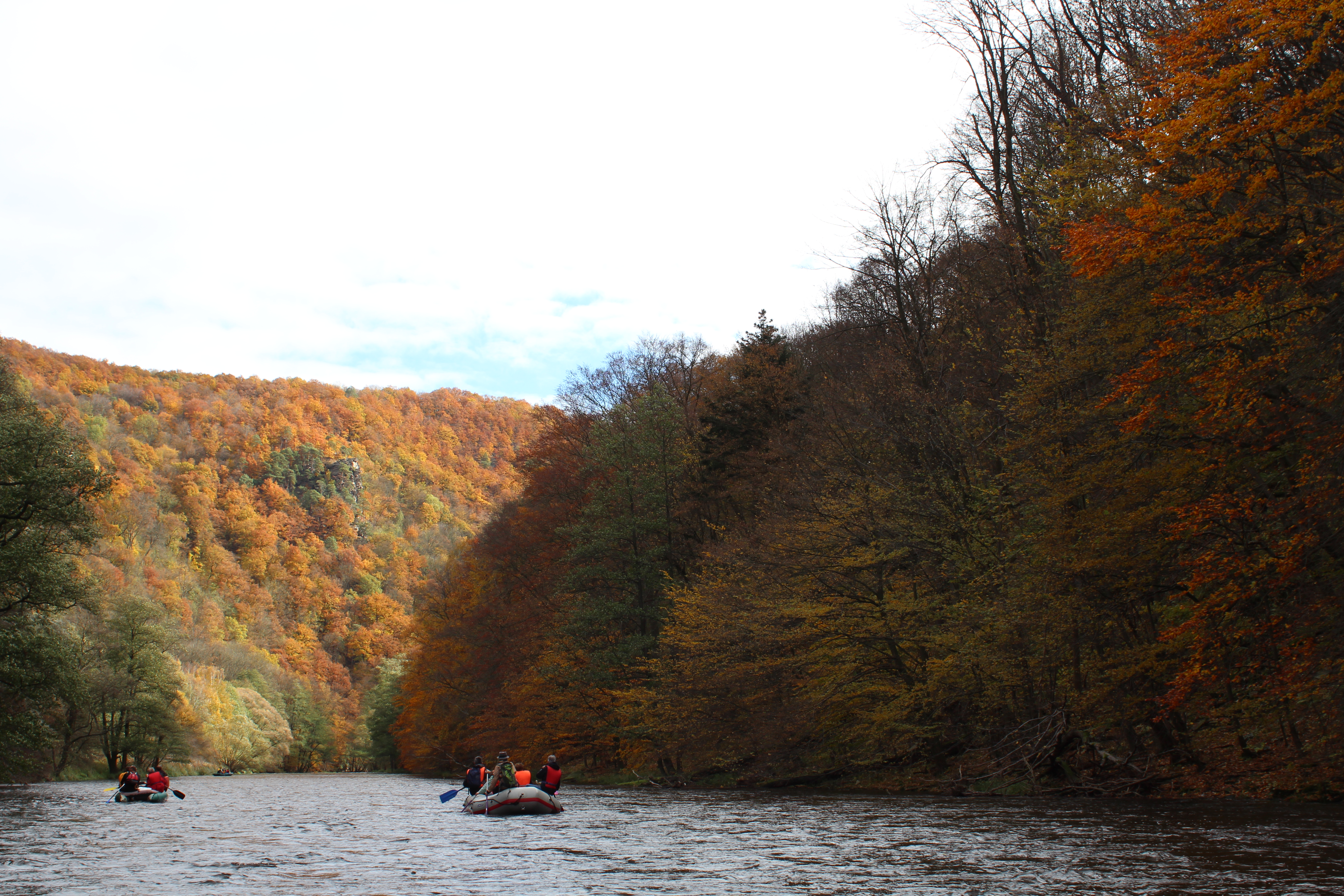
The final day included a nice excursion of rafting along the Thaya River and hiking back through the park.

Czech Castle near Thayatal NP

Czech Castle near Thayatal NP

The Thaya River
The Thaya River

Social-Ecological Systems and the Concept of Territoire

Over the past 10 days, I had the good fortune of participating in two Workshops – one on transboundary conservation and the other on social-ecological systems.  For the moment, I’d like to discuss a bit of the conversation at the latter.  I had the honor of serving as a keynote speaker to one of the warm-up events for the Resilience 2014 conference in Montpellier, France next year (May 4-8, see http://www.resilience2014.org/).  The workshop title was “Confronting “socio-ecological systems” and “territoire” as suitable lenses to tackle resilience issues”.  It attempted to combine the work of resilience scholars, such as myself, and our work on complex adaptive systems/resilience/coupled human-environment systems with the work of (predominantly) French geographers and anthropologists using territoire to analyze a similar set of problems.

I learned a great deal about territoire and how this guides analysis and understanding.  What surprised me the most was the amount that the two approaches had in common – the importance of scale, of socio-spatial relations, and the linking of people and their environment.  I had expected a great deal more discussion coming from a post-structural, post-modern, Foucaultian analysis, which I must say that I’m not smart enough to truly understand.  Instead, the discussion revolved around all of the similarities in approaches.

A number of points emerged, however, that warrant further discussion, points that will hopefully come out of the proceedings from the workshop.  At least these were the five main take-aways for me.

  • Both social-ecological systems and territoire approaches share a number of important commonalities (as related above).
  • The drawing of boundaries for analysis is critical to enable understanding in either approach.
  • Many social-ecological system analyses seem to favor one aspect of the system over the other – often heavily SOCIAL-ecological or social-ECOLOGICAL.  Balanced approaches are far less common.
  • The theme for the Resilience 2014 conference – Resilience and Development – fits well with key traits implicit in the territoire scholarship, notably poverty, inequality, and the need for development.
  • Resilience scholars need to do a better job at more explicitly acknowledging the normative aspects of their work.

I had initially intended to write about this final discussion point, given other recent research projects, but I’d like to revisit this in more detail in the coming weeks.  For now, here’s my introduction to French geography.